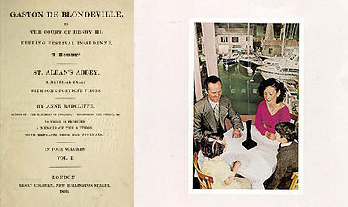
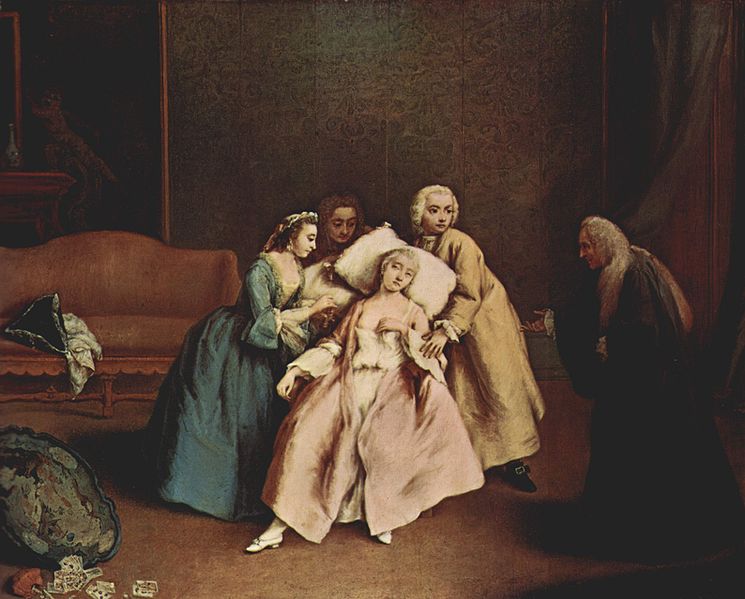
A voice called her, but she was gone beyond its reach, for she had sunk senseless upon the ground: it was long before she revived, when she did, she found herself in the arms of a stranger, and made an effort to disengage herself. — Ann Radcliffe, The Romance of the Forest
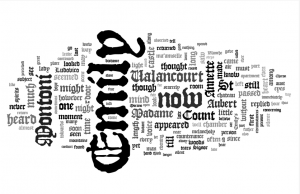
My wife and I are in the middle of Radcliffe’s The Italian, and just like you can never have a Michael Bay film without lots of explosions, there is no Ann Radcliffe without swooning. I’ve described Udolpho to people as “a great book with a lot of swooning and crying,” and any time I’ve encountered an argument that the book is anti-feminist, it usually centers around constant fainting (in response to shock, horror, or an insensitive comment) as the ultimate depiction of female passivity.
Personally, I think it’s problematic to call Radcliffe’s novels either feminist or anti-feminist… by the standards of her day, the heroines are admirably principled, logical, and empathetic. They have a social and ethical common-sense beyond that of their paramours. Radcliffe’s depiction of gender roles, however, is thoroughly traditional, and the significance of “proper conduct” trumps what most of us would consider more material concerns, like happiness and survival.
Regardless, it is problematic from a Darwinian perspective to have her heroines faint at the drop of a hat. Here someone is compromised and vulnerable — imprisoned, cut off from news and information, harassed by threats and speculation — and she eliminates the little control she maintains by being insensible, dead almost, and literally unable to learn, act, or express herself.
It certainly implies something of the submission-is-power theme, in that the same heroines never waver in their moral resolve, and always triumph in the end. And yet there is nothing intentional about their behavior… they aren’t deciding to swoon.
So I’m not really sure what to make of this occurrence. Is the conspicuous swooning significant to a larger understanding of the Gothic, or is it reflective of a historic attitude that is as impractical as it is sexist? I suspect the answer is both, but I don’t know that I can get more specific than that.